
It's no surprise that we're all drowning in information, both personally and professionally. But it's not just text anymore. Valuable insights are often buried in images, charts, tables, and diagrams. Traditional AI systems, as powerful as they are, are designed for text. They're like detectives who can only read, not see the crucial evidence in the photos.
For example, here's a screenshot of a white paper. As you can see, it's a combination of text and an image of an architecture diagram. (By the way, it explains how transformers work.)
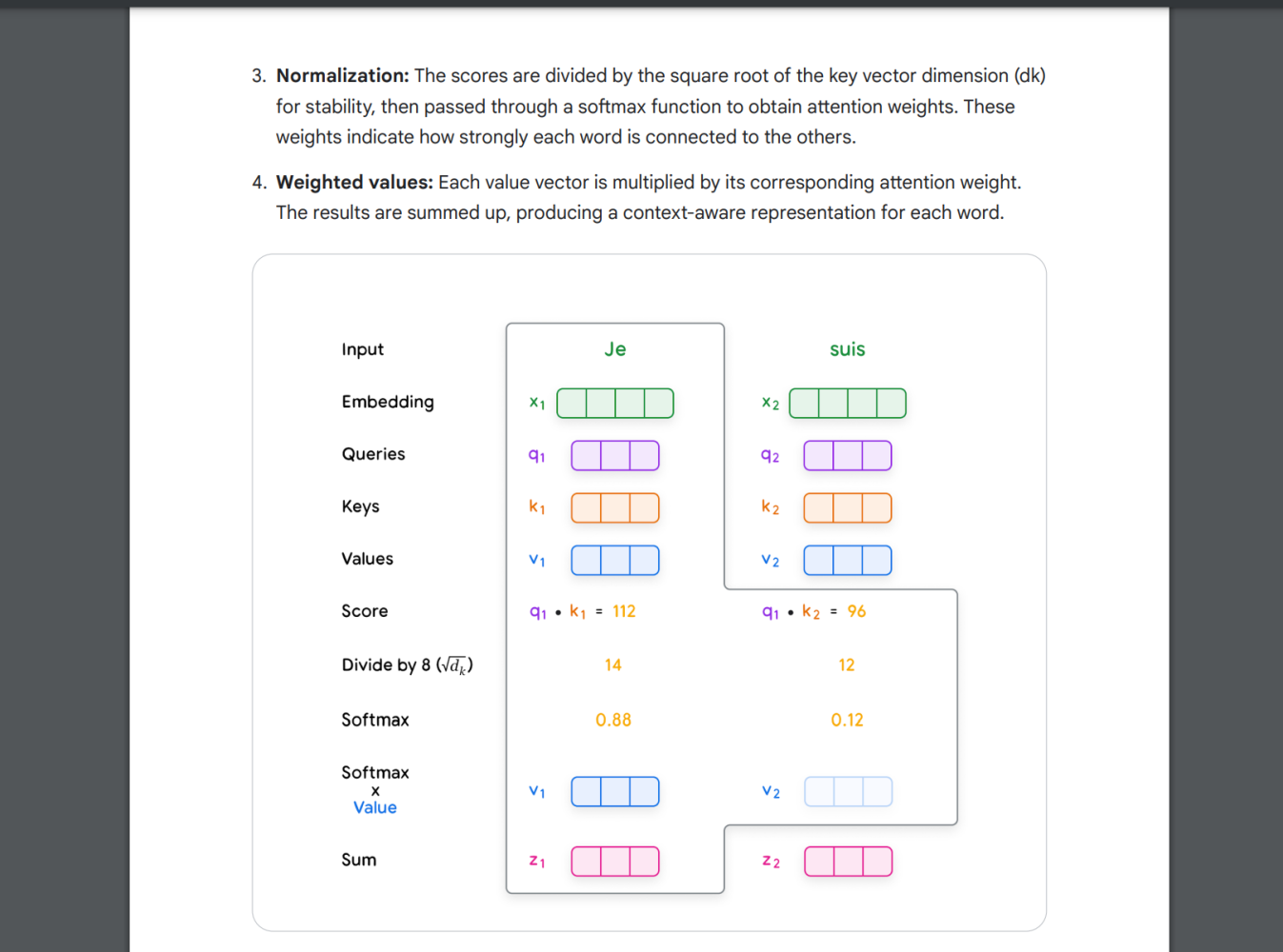
This is where Multimodal RAG comes in, transforming how we access and understand information.
Let's recap:
What is RAG? It's a clever technique that combines Large Language Models (LLMs) with vector databases. This allows you to ask questions in plain language and get answers based on your specific data.
Here's how it works:
- Ingestion: The system starts by breaking down the text data into smaller chunks. These chunks are then converted into "vectors" that capture the meaning of the text.
- Query: At the same time, your question is also turned into a vector. The system then searches through the ingested data for the most similar vectors.
- Answer Generation: Using these relevant chunks, the LLM then crafts a detailed answer to your question.

But here's the catch:
Traditional RAG is text-bound. It misses the valuable information locked in visual elements. Imagine analyzing a research paper where a crucial finding is presented in a chart, not just the text. Standard RAG would overlook this, leading to incomplete or misleading answers.
What exactly does "Multimodal" mean?
Before we dive into the solution, let's clarify. "Multimodal" simply means that data comes in different modes or types. Think of it like this: you can read a book (text), look at a picture (image), watch a movie (video), or listen to music (audio). Each of these is a different mode of information.

This is where Multimodal RAG shines. It extends the power of RAG to encompass all data types - text, images, tables, you name it. It's like giving your RAG system a pair of eyes.
Here's how Multimodal RAG works:
- Extract & Describe: Gemini being Multimodal by default creates text descriptions for those images, making them understandable to the system.
- Vectorize Everything: Both text and image descriptions are converted into vectors. Additionally, dedicated image embeddings are created using services like Vertex AI multimodal embeddings.
- Hybrid Search: When you ask a question, the system searches for relevant information across all modalities - text, image descriptions, and image embeddings.
- Answer Fusion: The LLM receives a prompt that includes both text and image contexts, along with citations, to generate a comprehensive answer.

Isn't this super cool?

Why Multimodal RAG is the next gen in the world of RAG:
Multimodal RAG isn't just an upgrade; it's a fundamental shift in how we access and understand information. Think of it this way: imagine trying to understand a complex concept by only reading about it, versus having a knowledgeable expert explain it to you with diagrams and examples. That's the difference Multimodal RAG makes.

Here's why it's a game-changer:
- Unlock the Full Story Hidden in Your Data: We all know that a picture is worth a thousand words, but traditional RAG systems are blind to those valuable insights locked away in images, charts, and diagrams. Multimodal RAG changes that, allowing you to extract knowledge from the full spectrum of your data, not just the text.
- See the Bigger Picture: Traditional RAG is like trying to assemble a puzzle with only half the pieces. Multimodal RAG gives your AI the ability to see the whole picture, connecting the dots between text and visuals for a deeper, more complete understanding.
- Discover What You've Been Missing: Think about the possibilities: Research: No more sifting through dense scientific papers, struggling to connect the text with the figures. Multimodal RAG can extract key findings from both, giving you a comprehensive understanding of the research. Technical Documentation: Say goodbye to deciphering complex diagrams and workflows in technical documents. Multimodal RAG can make sense of it all, providing clear and concise answers to your questions. Finance: Stop wasting time manually extracting data from financial reports. Multimodal RAG can analyze tables and charts, delivering the insights you need in seconds.
Multimodal RAG is not just about doing things better; it's about doing things differently. It's a fundamental shift that empowers you to leverage the full potential of your data, leading to better decisions, deeper understanding, and a more informed future.